Introduction: Why AI-Powered SEO Tools Are Essential for Generative Search
The way people search is changing fast. You’ve probably noticed that instead of a list of blue links, Google, ChatGPT, and Perplexity now serve up direct answers. This shift from traditional search to generative search means the old rules of SEO no longer apply. By 2026, SEO is defined by presence within AI-generated answers and citations rather than position on a results page. If your content isn’t cited by these models, you’re invisible.
Here’s the problem: AI platforms like ChatGPT and Google AI Overviews pull information from your site and present it as a summary—without the user ever clicking through. That’s traffic cannibalization. A full 77% of SEO professionals fear AI answer cannibalization, worried that LLMs will intercept their top-of-funnel traffic. And they’re right to be concerned. Google AI Overviews trigger in 25% of searches and can reduce click-through rates by over 34%.
But this isn’t a reason to panic. It’s a reason to adapt. The AI SEO tools market is projected to grow from $1.2 billion in 2024 to $4.5 billion by 2033, and 56% of marketers are already using generative AI for SEO tasks. These tools help you optimize for how AI models interpret and cite your content—not just for ranking.
In this guide, we’ll cover how AI-powered SEO tools work with generative search engines, how to avoid traffic cannibalization, and the strategies you need to maintain visibility. Whether you’re optimizing for ChatGPT or Google AI Overviews, the approach is different—but the goal is the same: get cited, not just ranked. For a deeper dive into the technical setup, check out our guide on integrating AI-powered SEO tools with your CMS.
How Generative Search Engines Cite and Rank Content Differently
So you understand why AI SEO tools matter. Now let’s get into the mechanics of how generative search engines actually work—because the rules of the road have changed.
When you type a query into Google today, there’s a 25.11% chance you’ll see an AI Overview at the top of the page. That number comes from an analysis of 21.9 million queries in Q1 2026, and it’s not a static figure—it’s climbing as AI Overviews trigger more frequently. Here’s the kicker: even if your content gets cited in that overview, traffic to your page can drop by 34.5% as AI Overviews trigger more frequently. The AI summary gives users the answer without clicking through.
That’s the fundamental difference from traditional search. Old SEO optimized for a list of ten blue links. Generative search optimizes for a single, synthesized answer—and the citation that comes with it.
How AI Engines Choose Their Sources
Generative search engines like ChatGPT, Perplexity, and Google AI Overviews don’t crawl the web the same way Google’s index does. They pull from existing search indices (ChatGPT uses Bing; Google AI Overviews uses its own index) and then synthesize answers. But here’s the critical insight: around 40.58% of AI citations come from Google’s top 10 organic results because AI engines start with what search algorithms already surface as high-quality content. If you’re not ranking in the top 10 for a given query, you’re already at a disadvantage for AI citations.
But ranking isn’t enough. AI engines prioritize content that’s structured for extraction—clear headings, concise paragraphs, and explicit answers to common questions. Traditional ranking signals like backlinks and domain authority still matter, but they’re now joined by factors like prompt relevance and citation frequency. A page that answers “What is the best SEO tool for small businesses?” directly and clearly is more likely to be cited than one that buries the answer in a 3,000-word essay.
Tracking Your AI Visibility
This is where tools like 77% of SEO professionals fear AI answer cannibalization come into play. It tracks brand mentions and explicit citations across over 260 million monthly prompts, covering ChatGPT, Perplexity, and Google AI Overviews. You can see exactly which prompt categories drive the most valuable visibility and calculate your AI Share of Voice—a metric that simply didn’t exist two years ago. For a practical guide on integrating these capabilities, check out how to integrate AI-powered SEO tools into your WordPress workflow.
The results can be dramatic. Discovered Labs helped a B2B SaaS company grow from 550 to 2,300+ AI-referred trials in just four months—a 318% increase. Their CITABLE framework focused on making content citation-worthy through structured optimization of key ranking factors. That’s not theory; it’s a real-world example of how systematic AI citation tracking pays off.
What This Means for Your Strategy
You’re now dealing with two parallel systems: traditional search rankings and AI citation patterns. The 58% of SEO professionals evolving into Hybrid Strategists who focus on systems architecture and prompt engineering understand this duality. They’re not abandoning traditional SEO—they’re layering AI optimization on top.
The practical takeaway: optimize for Google’s top 10 to get into the AI citation pool, then structure your content so AI engines can easily extract and cite it. Track your performance across platforms using tools like Ahrefs Brand Radar. And remember—being cited isn’t the same as being clicked. You need content that compels users to visit your site even after reading the AI summary.

The next section will show you exactly how to build that dual-optimization workflow, starting with the specific tools that make it possible.
Top AI-Powered SEO Tools for Generative Search Optimization
So you understand how generative search engines decide what to cite. Now comes the practical question: what do you actually do about it? The good news is that a new category of AI-powered SEO tools has emerged to answer exactly that. And $4.5 billion by 2033, according to 2026 data. Those who haven’t started are falling behind.
These tools break down into three functional buckets: tracking where you appear in AI responses, optimizing your content to get cited, and analyzing performance across platforms. Here’s what each category looks like in practice.
Tracking Your AI Visibility
The first challenge is simply knowing if generative search engines mention your brand. Traditional rank trackers won’t help you here—there are no page-one results to monitor. Instead, tools like Ahrefs Brand Radar scan the output of AI models directly. It tracks brand mentions and explicit citations across over 260 million monthly prompts, covering ChatGPT, Perplexity, and Google AI Overviews. You get something called AI Share of Voice—a metric that didn’t exist two years ago but now matters as much as organic ranking position.
Semrush offers a similar capability through its AI Visibility Toolkit, which tracks citations across multiple AI search engines in one dashboard. Peec AI, launched in 2025, focuses specifically on monitoring brand citations across generative search. And Profound provides multi-engine visibility tracking, letting you see where your brand appears and where competitors are winning citations instead.
Rankscale.ai goes a step further, letting you filter by term, region, mode, and interval. If you’re a Singapore-based business targeting local customers through AI search, this granularity matters—you can see exactly how your brand performs for “best coffee shop in Singapore” versus “co-working space near me.”
Content Optimization for AI Retrieval
Tracking is useless if you can’t act on the data. That’s where content optimization tools come in.
Writesonic includes an Action Center that diagnoses technical barriers preventing large language models from properly crawling your site. If your content structure confuses AI retrieval, it tells you exactly what to fix. Surfer SEO now includes an AI Tracker that monitors your content’s performance in both Google and AI platforms simultaneously. Clearscope provides search intent-oriented suggestions aligned with how AI models evaluate relevance—not just keyword density, but topical authority signals.
For a deeper look at how these tools compare for local markets, check out our comparison of the best AI SEO tools for local search in 2026.
Analytics and Workflow Integration
The most sophisticated tools treat AI citation share as a primary KPI, not an afterthought. AirOps built its entire platform around this concept. Its Insights layer tracks brand citations across ChatGPT, Perplexity, Google AI Overviews, and traditional search, then surfaces citation gaps by topic, query, and competitor. You can prioritize which content gaps to fill based on actual citation data rather than guesswork.
SE Ranking offers an AI Overview Tracker that monitors how your content appears in AI-generated search results. And for e-commerce businesses specifically, the numbers justify the investment: AI-driven SEO can boost organic traffic by 45% and conversion rates by 38%.
Choosing What Fits Your Business
Not every business needs every tool. Here’s a practical framework:
| If your priority is… | Start with… | Why |
| Basic citation awareness | Ahrefs Brand Radar or Peec AI | Low setup, immediate visibility data |
| Content optimization | Clearscope or Surfer SEO | Directly improves how AI models evaluate your pages |
| Competitive intelligence | Semrush or Rankscale.ai | Multi-platform benchmarking and granular filtering |
| Full workflow integration | AirOps | Combines tracking, analysis, and automated content workflows |
The broader shift is worth noting: 58% of SEO professionals are evolving into Hybrid Strategists—people who understand systems architecture, prompt engineering, and brand narrative alongside traditional SEO. The tools above are the instruments of that evolution. Pick the ones that match where your business is today, and expand as your AI visibility strategy matures.

How to Measure AI Search Visibility and Optimize for Multiple Platforms
The tools we just covered are only half the equation. You need to know what to measure and how to adapt your strategy for each platform. Because here’s the uncomfortable truth: treating AI visibility as a single metric is a mistake.
The Metrics That Actually Matter
Traditional SEO metrics like keyword rankings and organic traffic still play a role, but they’re no longer the full picture. By 2026, SEO is defined by presence within AI-generated answers and citations rather than position on a results page. That shift demands new KPIs.
Three metrics deserve your attention:
- Citation share — How often your brand or content appears as a source in AI responses. This is the closest thing to a “ranking” in the generative search world.
- Brand mentions — The frequency and context of your brand name appearing across AI platforms. Tools like Ahrefs Brand Radar now track this across ChatGPT, Perplexity, Gemini, and Claude.
- Traffic from AI referrals — Users clicking through from AI-generated answers to your site. This is harder to track but increasingly critical as platforms add clickable source links.
The relationship between these metrics isn’t straightforward. AI Overviews can cut traffic to cited pages by 34.5% even when cited, because users get their answer without clicking through. That doesn’t make the citation worthless — it still builds brand awareness and authority — but it means you can’t rely on click-through rates alone.
Platform-Specific Optimization
The Slate HQ study from March 2026 revealed something crucial: ChatGPT and Perplexity share only 11% of cited domains. That’s not a rounding error — it’s proof that each platform has its own citation logic.
Here’s what the data tells us about each major platform:
ChatGPT — Consistently shows the worst brand visibility across all six companies studied. It pulls from Bing’s index, so optimizing for Bing is your starting point. But ChatGPT also favors recent, well-structured content with clear entity relationships.
Perplexity — Operates as a search-first AI with numbered source lists. Content updated within the last 12 months earns 3.2x more citations. Freshness matters more here than on any other platform.
Gemini — Google’s AI model naturally favors content already ranking in Google’s top 10. That makes sense when you consider that around 40.58% of AI citations come from Google’s top 10 results. Strong traditional SEO is still the foundation.
Claude — Gives brands 9.1% owned citation share, the highest among AI platforms. Claude seems to reward authoritative, well-cited content with clear attribution.
The takeaway? You can’t optimize for one and expect results across all four. Each platform requires a tailored approach.
What Real Results Look Like
eSEOspace’s unified approach combining traditional SEO with Generative Engine Optimization, Answer Engine Optimization, and Large Language Model Optimization delivered an average 75-85% increase in AI citations within 90 days for clients across multiple industries. They built a proprietary real-time AI visibility tracking platform to measure this — because existing tools weren’t cutting it.
For Singapore SMEs, the ROI story is equally compelling. Those adopting AI SEO tools under IMDA’s Productivity Solutions Grant reported average cost savings of 52% in 2024. The grant covers up to 50% of pre-approved digital marketing solutions, making AI SEO adoption significantly more accessible. AI adoption among Singapore SMEs tripled from 4.2% to 14.5% in one year.
If you’re just starting to measure your AI visibility, focus on citation share first. It’s the most trackable metric and the one that correlates most strongly with traffic growth. AI-driven SEO can boost organic traffic by 45% and conversion rates by 38% for e-commerce websites — but only if you’re measuring the right things.
For a deeper look at how to integrate these measurement strategies into your existing workflow, check out our guide on integrating AI-powered SEO tools with your content management system. The platforms will keep evolving, but the measurement framework you build today will serve you regardless of what comes next.
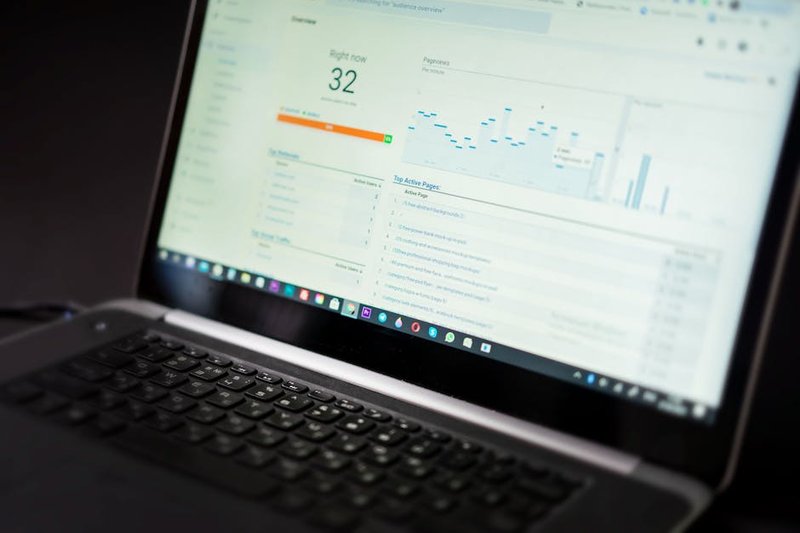
Adapting Your SEO Strategy for the AI-First Era
You’ve already seen how to measure AI search visibility and optimize across platforms. But knowing what to track is only half the equation. The real question is how you restructure your entire approach to thrive in this new environment.
The fundamentals of SEO haven’t disappeared—they’ve expanded. By 2026, success in search is defined by presence within AI-generated answers and citations rather than position on a results page. That’s a fundamentally different game. You’re no longer competing for the number one spot on Google; you’re competing to be the source an AI trusts enough to cite.
The Rise of the Hybrid Strategist
This shift demands a new kind of professional. The days of the pure keyword-stuffer or link-builder are fading. What’s emerging is the Hybrid Strategist—someone who understands both traditional SEO mechanics and the nuances of how AI models process and select information.
The numbers confirm this transition is already underway. 58% of SEO professionals are actively adapting by evolving into Hybrid Strategists who focus on systems architecture, prompt engineering, and maintaining brand narrative. Meanwhile, $4.5 billion by 2033. This isn’t a future trend; it’s happening now.
What does a Hybrid Strategist actually do differently? They don’t just optimize a page for a keyword. They structure content so an AI can easily extract entities, relationships, and authoritative context. They understand that a well-crafted piece of content isn’t just for human readers—it’s a data point for a model like ChatGPT or Gemini.
Consider the work of Cyrus Shepard, who analyzed 54 peer-reviewed studies to identify 23 scored AI Citation Ranking Factors. His analysis provides an evidence-based view of what actually gets content cited by AI engines like ChatGPT, Gemini, and Perplexity. The key takeaway? It’s not about keyword density. It’s about entity clarity, topical authority, and structured data that makes your content machine-readable without sacrificing human value.
The Cost Reality for Singapore SMEs
You might be thinking this sounds expensive. The data suggests otherwise—especially for Singapore businesses. The AI SEO tools market is projected to grow from $1.2 billion in 2024 to $4.5 billion by 2033, which signals increasing accessibility and competition among providers.
For Singapore SMEs, programs like Stridec’s MRA Grant AI SEO Programme make this transition particularly cost-effective. The program applies an entity-first methodology structured for MRA audit compliance, with pricing at S$6,000 per market after a 70% grant subsidy. That’s a significant reduction in the barrier to entry for overseas expansion.
A Unified Platform for a Fragmented Landscape
Here’s where things get practical. You don’t want to manage five different tools—one for Google rankings, another for AI search visibility, a third for lead generation. That’s inefficient and creates data silos.
Fivebucks AI was built to solve exactly this problem. It’s a unified platform that optimizes your content for both Google and AI-powered search engines simultaneously. You get traffic growth, lead generation, and visibility across generative search—all from a single dashboard.
If you’re looking to understand how this fits into your existing workflow, our comparison of the best AI tools for SEO in 2026 breaks down the options available.

The path forward is clear. Stop optimizing for a single search engine. Start building content that works across Google, ChatGPT, Gemini, and Perplexity. The Hybrid Strategist doesn’t just survive this transition—they lead it.
Your Next Move
The window for early adoption is closing. As more businesses shift to this AI-first approach, the cost of inaction compounds. You can continue optimizing for 2019’s search landscape, or you can start building for 2026’s reality.
Start optimizing for generative search with Fivebucks AI. One platform. Both search worlds. Real results.
About Petric Manurung
Petric Manurung is the Founder & CEO of Fivebucks AI, an SEO and GEO platform built for businesses that want to rank in both traditional search and AI-generated results. With 20+ years across global enterprises — Lufthansa Systems, Apple, Toll Group, CEVA Logistics — he has a firsthand understanding of how visibility gaps cost businesses at scale.
He holds an MBA from Western Michigan University and a HubSpot SEO Certification. Fivebucks AI is where that expertise ships as product — giving teams the tools to optimize for the way people actually find things today: search engines and AI answers alike.
Sources & References
This article incorporates information and insights from the following verified sources:
[1] 77% of SEO professionals fear AI answer cannibalization – Yotpo (2026)
[2] $4.5 billion by 2033 – DemandSage (2026)
[3] SEO is defined by presence within AI-generated answers and citations – Adobe Business (2026)
[4] as AI Overviews trigger more frequently – Digital Applied (2026)
[5] ChatGPT and Perplexity Share Only 11% of Cited Domains – Authority Tech (2026)
[6] AI Citation Tracking: How to Measure Citation Frequency – Averi AI (2026)
[7] Why AI Citations Come from Top 10 Rankings – Passionfruit (2025)
[8] 23 factors that actually get your content cited by AI search engines – PPC Land (2026)
[9] AI Search Optimization: Top Guide to Generative Engine Optimization – 310 Creative (2026)
[10] 4 Most Important AI Visibility Metrics for B2B Brands to Track – Rampiq Agency (2026)
[11] How AI is Changing SEO for Singapore Businesses in 2026 – Stridec (2026)
[12] AI SEO Singapore: How Businesses Win with AI-Driven Search in 2026 – Audience Intelligence (2026)
[13] AI-Driven SEO Services Singapore 2026 – Sotavento Medios (2026)
[14] Generative engine optimization: What we know about generative SEO – HubSpot (2025)
[15] AI SEO vs Traditional SEO | What Actually Works in 2026 – Doc Digital SEM (2026)
[16] 15 Best AI SEO Tools We’ve Tested for 2026 – One Little Web (2026)
[17] Top SEO Agencies for AI Search Optimization in 2026 – eSEOspace (2026)
[18] Internal: integrating AI-powered SEO tools with your CMS – https://www.fivebucks.ai/blogs/post/integrate-ai-powered-seo-tools-wordpress/
[19] Internal: comparison of the best AI SEO tools for local search in 2026 – https://www.fivebucks.ai/blogs/post/best-ai-tools-seo-local-comparison-2026/
All external sources were accessed and verified at the time of publication. This content is provided for informational purposes and represents a synthesis of the referenced materials.
Leave a Reply